Showing posts with label Chinese Temples. Show all posts
Wednesday, February 2, 2011
Magic in a Chinese Temple
When visiting a Chinese Buddhist temple or taking part in a Chinese temple stay, if you are alert and tuned in you can experience what is termed in Chinese as “ling” a type of magic or presence. It is very hard to describe but many who have spent some time in a Chinese temple stay will know what I am talking about.
“Ling” is a charged energy created by often centuries of prayerful and sincere chanting and meditation of the monks and nuns.
Guang Jue Temple near the small town of Zaoxi in Zhejiang province in China is one such place. You can catch a bus from Shanghai South bus station to Lin’an then a smaller local bus to Zaoxi town. Alighting at Zaoxi town you stroll through a sleepy little rural town past groups of townsfolk playing Mahjong in shop fronts and shop keepers dozing off during the afternoon siesta on reclining camp chairs out front of their shop. The narrow street makes its way past the local school over a bridge and before long you find yourself walking past fields of corn with meandering streams with ducks lined up on floating bamboo poles. The country road exudes a scent from Lady Moon trees lining both sides of the road and mature provides its backdrop of breathtaking mountain scenery. The road has a poetic Chinese name: Cloud Mountain Road. After two kilometers you come across a stone sign with Guang Jue Temple engraved upon it in Chinese, of course.
The first time I walked this road it seemed that my walking pace slowed down almost as if my legs and mind joined in some clandestine scheme to slow down my whole being in preparation for my stay at the Qing dynasty monastery. As I turned into the lane that made its way past bamboo and rice fields I could make out the outline of the monastery building amid bamboo groves.
It was a sunny autumn day and hosts of large blue winged butterflies danced across the yellow pumpkin flowers growing outside the monastery gate. Only the sound of cicadas and small sparrows could be heard amidst a deepening silence.
A Chinese temple plays with the senses. The colours of flowers and paintwork of the ancient temple, the scent of old rosewood furniture and incense is there to intrigue you. I felt a little dizzy. It seemed surreal. Time had stood still. I found myself standing in another era in a deep sense of Pure Land peace. My reverie was soon interrupted by the greeting and welcoming smile of the Abbott, Zheng Rong.
All Chinese Buddhist Temples have a history. Guang Jue Temple has its own history which gives form and shape to its “magic”. During the Qing dynasty it housed over two hundred monks and nuns. Now only five remain. During the Sino-Japanese war in 1942 the temple took a direct hit from bombs dropped randomly from low flying aircraft making their way to Hangzhou to pound the city. Locals tell me that all monks and nuns fled and there were no casualties. All left except one nun. Her name was Jue Ming.
We often hear of the great feats of meditation of the renowned Masters of Chinese Buddhism or read their erudite commentaries about sutras or their methods of achieving enlightenment. We seldom read about forgotten monks, nuns or even lay people who devoted whole chunks of their life to the practise often under harsh conditions. Jue Ming refused to leave the ruins feeling that she had to reverse the tide of Karma that brought the very destruction on the temple. For almost fifty five years Jue Ming performed the Pure Land Buddhist practise of chanting the name of Amitabha Buddha continually day and night as well as the chanting of mantras and sutras. Locals cannot explain why she remained undetected for so long – perhaps they considered her a fool. It was not until the present Abbott commissioned by his temple in Hangzhou to go in search of this reported hermit nun that she was found and brought back to her community.
One morning at an earlier temple stay I found myself drawn to the memorial garden marking the spot where Jue Ming prayed and chanted each day and where her ashes are now interred. It was a very cold autumn morning shrouded in the mountain mists. I sat on a small stone seat. It was so very cold I wanted to change my mind and go back to my room. As quickly as this thought entered my mind I felt a warm flow of air about me. I meditated in peaceful bliss for over an hour without feeling any cold. What was this warm air? Where did it come from?
Even the most skeptical admit to experiencing a very “warm” or “good” or “serene” feeling. Most people who come here on their Temple Stay feel a deep change taking place. Guang Jue is a Chinese Temple with “ling”. More than that, it has a lesson to teach each one of us if we will allow it. Magic remains only magic if all it does is take your breath away. It becomes awakening when is gives you a new breath of life.
Saturday, October 16, 2010
The Chinese Temple of Faith from the Ruins
Guang Jue Temple is situated in Zhejiang Province, China, West of Hangzhou on the fringes on a small rural town called Zaoxi. The temple is surrounded by bamboo forested mountains amidst nature and tranquility.
It dates back to the Qing Dynasty to the late 1700’s. In those times some 200 monks and nuns lived there. Devotees came from as far as Shanghai to worship and celebrate major Buddhist festivals. It was the centre of community life.
Sadly Guang Jue was largely destroyed in 1952 during the Sino-Japanese war with all but one of the monks and nuns fleeing to safety. However, one remained to live amidst the ruins, faithfully continually chanting the Buddha Name and performing the daily chanting services in isolation. Locals were not inclined to go there during the later Cultural Revolution.
It was not until the late 1990’s that word about this nun reached Hangzhou and the Venerable Zheng Rong was despatched by his own Master to search for the nun and return her to the safety and teaching of an active Sangha. The Venerable Zheng Rong describes how he located her amid the ruins softly reciting the mala beads chanting the Buddha Amitabha’s name. He was brought to tears at the sight of such intense devotion. He eventually persuaded her that the war was over and to return to Hangzhou to be under the care and teaching of a Venerable.
It was a day or so before Master Zheng Rong could return by bus to Hangzhou so he stayed on at the site of the ruins. On his first night he had a dream. In that dream the Amitabha Buddha surrounded by intense light appeared to him and asked him to rebuild the temple. He describes how he was so struck by this vivid dream that he could not move. So he stayed. Over the ensuing years he gradually rebuilt the temples. There is only one temple now that is still in need of restoration.
Guang Jue stands as a testimony to unshakeable faith in Amitabha Buddha and a parable for our own lives. There are now only five monks who have joined the Master Zheng Rong. Each morning the large bell is sounded at 4:30am and reminds all who live in this sleepy valley that within spiritual faith lays great strength. There is no anger or hatred at what happened in the past – only love and compassion. At the centre of Master Zheng Rong’s teaching is the call to examine our thoughts and actions as these will form future consequences. Only thoughts and acts of love and peace will create love, peace and prosperity for our world.
There is a remarkable spiritual energy within the temple halls, an energy born from the continual chanting of one nun. All who come here feel it and are changed by it.
I have been honoured to be accepted as a disciple of the Venerable Zheng Rong and to be given the responsibility to carry forward the Pure Land teaching of compassion to all sentient beings. The Pure Land is not far from each of us for it is but one breath away in our minds. Each of us has the capacity to create the Pure Land here now in our midst building a world of peace and beauty for all peoples of all nations.
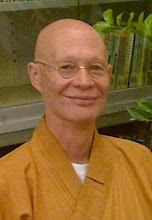
Zhe Shen (Malcolm Hunt)
Retreat Facilitator Guang Jue Monastery.
It dates back to the Qing Dynasty to the late 1700’s. In those times some 200 monks and nuns lived there. Devotees came from as far as Shanghai to worship and celebrate major Buddhist festivals. It was the centre of community life.
Sadly Guang Jue was largely destroyed in 1952 during the Sino-Japanese war with all but one of the monks and nuns fleeing to safety. However, one remained to live amidst the ruins, faithfully continually chanting the Buddha Name and performing the daily chanting services in isolation. Locals were not inclined to go there during the later Cultural Revolution.
It was not until the late 1990’s that word about this nun reached Hangzhou and the Venerable Zheng Rong was despatched by his own Master to search for the nun and return her to the safety and teaching of an active Sangha. The Venerable Zheng Rong describes how he located her amid the ruins softly reciting the mala beads chanting the Buddha Amitabha’s name. He was brought to tears at the sight of such intense devotion. He eventually persuaded her that the war was over and to return to Hangzhou to be under the care and teaching of a Venerable.
It was a day or so before Master Zheng Rong could return by bus to Hangzhou so he stayed on at the site of the ruins. On his first night he had a dream. In that dream the Amitabha Buddha surrounded by intense light appeared to him and asked him to rebuild the temple. He describes how he was so struck by this vivid dream that he could not move. So he stayed. Over the ensuing years he gradually rebuilt the temples. There is only one temple now that is still in need of restoration.
Guang Jue stands as a testimony to unshakeable faith in Amitabha Buddha and a parable for our own lives. There are now only five monks who have joined the Master Zheng Rong. Each morning the large bell is sounded at 4:30am and reminds all who live in this sleepy valley that within spiritual faith lays great strength. There is no anger or hatred at what happened in the past – only love and compassion. At the centre of Master Zheng Rong’s teaching is the call to examine our thoughts and actions as these will form future consequences. Only thoughts and acts of love and peace will create love, peace and prosperity for our world.
There is a remarkable spiritual energy within the temple halls, an energy born from the continual chanting of one nun. All who come here feel it and are changed by it.
I have been honoured to be accepted as a disciple of the Venerable Zheng Rong and to be given the responsibility to carry forward the Pure Land teaching of compassion to all sentient beings. The Pure Land is not far from each of us for it is but one breath away in our minds. Each of us has the capacity to create the Pure Land here now in our midst building a world of peace and beauty for all peoples of all nations.
Zhe Shen (Malcolm Hunt)
Retreat Facilitator Guang Jue Monastery.
Subscribe to:
Posts (Atom)