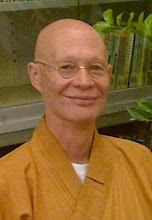
“John” was one of those faces. A month prior to him flying all the way from the UK to China he had been in a psychiatric hospital having been admitted with deep depression after attempting suicide. John had been in treatment for many years for anxiety and depression and had not held a job for five years. After hearing about Guang Jue Temple and reading about Buddhist healing from a trip to Beijing, John decided to visit and have temple stay for one month in the hope that he could be relieved of the “head full of anxious thoughts.” I will not forget the look on John’s face when I told him that there was no way he could be relieved of anxious thoughts but that he could learn to live in a whole new relationship with them. The frown, the mouth agape, a look of bewilderment all flashed past like prints in a picture book. John was about to re-learn life from a Buddhist perspective.
At first the 4:30am rising was a huge challenge for John who was used to sleeping in until quite late in the morning. Meditation and chanting did not come naturally to him. John’s background was in Computer Science and the world of the monastery was a strange environment to him. Eating a vegetarian diet of plants, herbs and vegetables if ever seen in Western green grocers was a further challenge. Added to this was a ancient philosophy of healing that seemed to go totally against the grain of current Western psychology.
Gautama Buddha was frequently referred to as The Great Physician. The Buddhist approach to life is able to bring healing on many levels. Chinese Buddhism has had a rich tradition of healing arts as it absorbed much of the Taoist medical philosophy. The Buddha was also known as the Awakened One – the meaning of the word Buddha. However as human beings we are far from awake. We spend our life asleep like the walking dead – asleep to our own potential living within a world of dream like illusion. The Buddha taught us another world of being alive and awake and contained within his teachings are the directions for re-discovering life.
Most healing modalities address only one or two aspects of the person. However we are an interdependent system of elements and each one must be carefully examined and balanced. Within the temple environment each of the Five Foundations of human life is addressed and life begins to take shape. It is Cause and Effect.
Every day each person has an opportunity to practise mindfulness, Qigong, chanting, meditation, Dharma and to experience the Five Foundations as they begin to take effect in one’s life.
It is early days yet but John left the Guang Jue monastery after four weeks lighter in mind and body. Two months later he has had no re-admissions to hospital, he has reduced his medication under medical supervision remarkably and he has now found meaningful part-time work and new meaning to life.
John is just one case study. There are many more who wish, naturally, to remain anonymous. However, there has in recent years been renewed interest in the healing of Buddhist as well as other religious practices within temples. One such article of interest was published in the British Medical Journal in July 2002, Traditional community resources for mental health: a report of temple healing from India by R Raguram, A Venkateswaran, Jayashree Ramakrishna, Mitchell G Weiss.
The Buddhist monastery is the ideal place for healing with its careful routine and tranquil environment along with the time honored methods of the Master Physician the Buddha. Modern medicine can alleviate pain but only the Buddha Dharma can eliminate suffering.