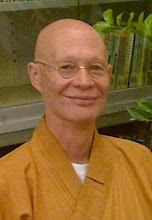
Mantras in Chinese Buddhism form an important part of daily Buddhist practice. The sutras contain a host of mantras uttered by Shakyamuni Buddha with clear instructions on the use and the benefits of such mantras. Each tradition or “school” of Buddhism will have its primary mantras used at its main daily ceremonies as we do at our monastery of Guang Jue Temple in China. Esoteric Buddhism places more emphasis on the chanting of mantras than other traditions. Nonetheless mantras play a dynamic role in our daily practice.
The “lore” of mantras in Chinese Buddhism is very little known in the West. The reasons for this may be varied. Firstly there is the inaccessibility of mantras. There has been only a small amount of work done in the Romanization of texts written in Chinese, that is, written in pinyin. What is available is often difficult to find as published and scholarly books on the subject are hard to come by. Secondly the Chinese mantras are on the whole transliterations from the ancient Sanskrit as it is considered that the sacred mantras uttered by the Buddha should not be translated but remain in their original version. This is because the sounds of the words play a significant part in the efficacy of the mantra. This makes the mantras unintelligible and rather strange sounding to the Western ear. Thirdly there is a lack of clear teaching about mantras and their use that can cross the cultural divide of Eastern and Western thought. Many still feel that mantras are the domain of superstition and are unnecessary to the daily practice of Buddhism.
I was first exposed to mantras as a young child in Southern China when father had left me in the care of an “Ai Yi” during his frequent business trips. The “Ai yi” would often take me to a local Buddhist temple where I heard monks reciting mantras and the Ai yi would recite them during her devotions at home. The sounds intrigued me as a child. At the same time they seemed to instill in me something which I felt was part of me as if the sounds resonated on another plane of my being. It was not until much later in life when I committed myself to Pure Land Buddhism that these ancient mantras began to make sense to me.
The words of the ancient Chinese mantras from the sutras of the Buddha have no clear meaning. Of course, one can translate the original Sanskrit – to a point. Even in the original Sanskrit there are words and whole sentences that are untranslatable. This is because the words of the mantra go beyond human meaning. They are the essential oils of the Dharma, the concentrated syrup of the sutras in which they were uttered. As they have no cognitive meaning they go beyond the “thinking’’ mind to our higher mind. It is here that their seed is planted and begin to take effect.
In Pure Land Buddhism it is part of our practice to chant the name of Amitabha Buddha; “Namo Amituofo” These two words are a mantra themselves resonating within our soul the name of the Amitabha Buddha, the Buddha of infinite Light and Life and dispelling the loads of impure karma.
Perhaps the most well-known of mantras in Chinese Buddhism is the Great Compassion Dharini. I recall one morning during an extended chanting of the mantra in the great temple hall at Guang Jue Monastery. Plumes of incense enveloped monks and lay people as the chant increased in tempo. I could discern the harmonic tones of the monks as my mind seemed to whirl and sway in the chant. The face of the Kuan Yin Bodhisattva peering through the incense clouds seemed to smile. I felt myself entering a warm trance and this warmth seemed to embrace my whole body. Later I tried to make meaning out of this experience. It was beyond meaning.
Traditionally different mantras are known for their specific actions. For example, the Medicine Buddha mantra is traditionally used for healing. The Cunti Spirit Mantra has been well known in Chinese folk lore for the granting of wishes. Do they have power? Can they heal? Many have attested to their power and help. I, too, have had personal experience of many mantras and their remarkable assistance to my own life and to those of others. It would be too lengthy to write these experiences in this document. I have, however, included here the personal experiences of a Chinese practitioner and his own recording of other people’s experiences. It makes interesting reading and may invoke the reader’s own interest to pursue mantras a little more closely. Indeed at Guang Jue Temple in China many come on Temple Stay or retreat and are able to study mantras more closely.
Do you have to believe in them for them to work? This is a question many ask me. Faith, is indeed important. However, the Buddha never insisted on blind faith but one that is reasoned and tested. I invite you to make your own tests and come to your own conclusions.
Hello dear friends, after some practices, I feel that different Buddha / Bodhisattva names, sutras, mantras or Dharanis have different flavor(effect)s. Many friends also have some experience about chanting holy-names/sutras/mantras/Dharanis. I would now like to share them with all you friends.
The meanings of the marks:
(1) - In normal state;
(2) – In a deeply meditative state;
(3) - The experiences told by other practitioners;
(?) - Unsure.
In general, all the holy names/sutras/mantras/Dharanis can eliminate bad karmic obstructions and debts for others or self, the followings are specific characteristics of each of them:
Amitabha / Namo Amitabha:
(1) Refreshing cool; brilliant light (can protect the practitioner); joy (can eliminate your bad mood); heart open; gentle; supplies life-energy; makes your body agile; improves your relationship with others.
(2) A very strong joy filled up the upper part of my body, that joy is far greater than the normal joy. (Buddha Name Samadhi?)
(3) Brilliant light; joy; warm flow; fragrance; wishes come true; often can know the future events; cure illness; pull upward (The chanter would feel that his soul is being pulled upward by a strength, this upward strength may counteract the downward strength of his own karma, so that he can fly up freely); saw the light from the tuft of white hair between the Buddha's eyebrows.
Om Ma Ni Pad Me Hum (Six-Words-Great-Enlightening-Dharani):
(1) Refreshing cool at the center of the heart; sometimes at the throat, mouth, and head also feel the Refreshing cool; eliminates the three poisons (greed, anger and ignorance); improve your wisdom.
(3) Refreshing cool; eliminates the three poisons; improve wisdom.
Shurangama Mantra (Heart):
(1) A large area of the chest feels the Refreshingly cool sensation; reduce leak; reduce lustful desire; overcomes the desire of meat eating; improves your wisdom; makes you clear-headed and energetic; makes you look more handsome; reduces desires to make keeping precepts easier; seldom dream or not having any dream at all; dispels evil spirits.
(2) made a secure protective boundary; vibration
(3) Reduces lustful desire; clear-headed and energetic; precepts keeping become easier
Medicine Master Buddha Dharani:
(1) Refreshing cool; cure illness; seldom dream/not having dream. The flavor of this Dharani is a bit similar to Shurangama Mantra.
(3) cures illness, helps release lower beings from their woeful state to a higher level when reciting in meditation
Great compassion Dharani:
(1) Refreshing cool; nourishes the body; removes the dreggy things in the body; cures illness; reduces leaking; reduces lustful desire; makes you look younger and more beautiful.
(2) The Refreshing cool energy filled up the whole body, illness and pains suddenly disappeared.
(3)Refreshing cool; feel peaceful; heart open, brilliant light, cure illness for one self or for other people; reduce lustful desire; overcome the greed for meat eating; skin become better; fragrance; wishes become true; body become lithesome; prevent aging; saw the Dharma-guarding gods.
Namo Avalokitesvara Bodhisattva (or Kuan Shr Yin/Kun Sye Yum)
(1) Refreshing cool; joy;
(3) makes one become happier; cures illness; reduces lustful desire; brings peace around you and for all the warring / angry beings; gives you protection from dangers; gives you a deep feeling of friendship and compassion to beings; help you cultivate these virtues
Ksitigarbha(Earth Repository) Bodhisattva and Ksitigarbha Bodhisattva Sutra:
(1) Warm; comforting; eliminates fears; reduces the greed for meat eating; makes you arouse Bodhi-Heart; makes you look more righteous; makes your mind concentrate
(3) Fragrance; reduces the greed for meat eating; wishes come true; often see companion in dreams; gets future premonition. allows you to make connection with the other world dimensions to help the sentient beings in suffering with transference of merits like at the Ksitigarbha ceremonies at the 7th month; protects you when you feel being in fear of any evil beings or in situations that is uncomfortably evil; gives you a deep feeling of compassion for the suffering beings, when you feel them suffering and so pitiful you forgive their evil sins.
Cundi Dharani (heart):
(1) Refreshing cool; brilliant light; heart open; reduces leak; reduces lustful desire.
(2) Very wonderful Dharma-flavor, difficult to describe.
(3) Reduces lustful desire; wishes come true.
Wonderful Dharma Lotus Sutra (Lotus Sutra):
(1) Help you to arouse Bodhi-Heart
(2) A very strong brilliant light emitted forth from the heart, even the people outside several meters can feel it; The Refreshing cool, cozy, joyful, and energetic feeling filled up the whole body for more than one day.
(3) Dharma-joy; cure illness; saw Samantabhadra Bodhisattva; Reduce lustful desire
Namo Myue Fard Lin Wah Ging("Namo Wonderful Dharma Lotus Sutra" in Cantonese):
(1) Very wonderful Dharma-flavor, difficult to describe, consists of the effects of heart open, brilliant light, Dharma-joy, Refreshing cool, life energy, etc., very delicious.
All Buddhs' heart secret whole-body Sharira precious-box mark Dharani:
(1) makes one's heart open; supplies life energy; makes you look more handsome; sometimes feel the Dharma-joy
(3) Saw that every thing around is circumambulating
Om Vajra Sattva Hum (Vajra-sattva's heart Dharani):
(1) Refreshing cool;
(3) cures illness; chanting the full 100 words mantra can make all the sentient beings around be attentive and want to listen to it and all very orderly
According to our experience, how big the effect of mantra-chanting could be, is dependent on the following aspects:
* How great your faith is; how much you believe in it
* How wide your heart open. The greatest heart-open state is Samadhi, chanting mantra in this state can get the greatest effect. To open your heart, you have to arouse Bodhi-Heart, that is, the resolve to save all living beings, the deep compassion to all living beings.
* How sincere you are;
* How well do you keep precepts;
* How diligent you are
I feel that the energy gained by holy-names/sutras/mantras chanting are spiritual foods. Wonderful Dharma Lotus Sutra says:
The living beings in that land will always take two kinds of food: The first, the food of Dharma-joy and the second, the food of Dhyana-happiness