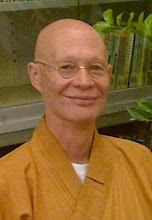
I was recently reading a text about Mindfulness and came across a chapter entitled “Know What Matters”. In the context of this specific book it was referring to knowing what is important so as to take mindful action upon rather than reacting aimlessly to any thought, feeling or situation. While the advice offered in the book was based on good intention I feel it was flawed because it makes an assumption that we actually know what matters in our lives.
The question begs, “Do we really know what matters?” In Pure Land Buddhism, as in Buddhism in general, this is a vital question. It was a question which confronted me at the beginning of my journey into Buddhism.
My first teacher in Buddhism was a rugged old monk from Mt Putuo in China. I had just come through a relationship break up and was searching for answers and relief from my suffering. I recall asking the question in an almost demanding type of tone. “But what do I do?” to which the answer came: “Do what really matters”. Now, that only added further to my confusion as I did not know what really mattered. I thought I did. What mattered was my peace of mind, my happiness, my career, my income. What really mattered, I thought, at the time was earning enough money to get myself back to Australia and resume my career. These thoughts spinning through my head were quickly intercepted by the follow up question as if my teacher knew that I did not know the answer. “But do you really know what matters?” My mind drew a blank.
You see, we think we know what matters based upon our desires and cravings. The world that matters to us is our own world full of ignorance. Now in Buddhism, ignorance has less to do about intelligence or education but more to do about knowledge of a wider and higher world and the skills to live in it. It was not long ago in the history of our world that people believed that if we travelled too far we would fall off the edge of the world. People believed that if we went too far into unchartered country there would be dragons and all types of monsters. Of course, we smile, because we now have the scientific knowledge of our planet and its environment and we have skills to live within it. However, Buddhism brings us to a whole new terrain and unchartered waters that challenges our ignorance.
So often when we pursue the things that we think really matter we find ourselves like dogs chasing their tails as we end up suffering again and again. We end up often making the same mistakes over and over again then blaming ourselves in the process for our perceived stupidity. We need to be a little more compassionate on ourselves at this point. We would not expect a grade three student to be able to solve algebra equations with limited maths skills. In the same way we cannot solve the problems of life and suffering with our limited life skills. Buddhism teaches us a new set of skills to live life skilfully and thus dissolving ignorance.
I could have walked away from the old monk from Mt Putuo thinking he was a fool. Instead he helped me see life from a far different angle. In fact if it had not been for the breaking up of the romantic attachment I was craving at the time I would never had been in the set of circumstances that lead me to meeting this monk in the first place and the subsequent journey into Buddhism which was to change my life.
In Pure Land Buddhism we have a process called Inner Meditation or Naikan as it is called in Japanese Pure Land Buddhism (Jodo Shinshu). In this very powerful meditative process we examine our entire life based upon only three questions. (1) What have I received from person X? (2) What have I given to person X? (3) What troubles and difficulties have I caused person X? In essence these three questions lead us to what really matters in life.
The first two questions address the gift of life, of giving and receiving. The third question upon which we spend two thirds of our time in meditation hones in on what blocks us from the gift of life. Life is a gift to be discovered. The Buddha discovered that gift under the Bodhi tree. It is no mere coincidence that the Buddha after acetic practises that left him weak and emaciated met a young girl offering the gift of milk curds. We often overlook this part of the story of Buddhism. The Buddha was offered a gift which sustained him and changed him. There is a gift for us too which will sustain and change us. The awakened life is seeing the gift in life. This is what is really important. Life is a gift to be unwrapped and shared. It is in the unwrapping of this gift that we also discover our own giftedness. The gift of life connects us to all of life in all its beauty and abundance. This is Pure Land. This is not some pie-in-the-sky ideal; it is the only way to live life. What is the alternative?
The Naikan process also trains us to see the obstacle to life in our own attachments, anger, frustrations and greed and in the harm we cause others. When we are aware of this we are more attuned and awakened to a path that only causes continued suffering.
In our practise we learn what really matters in life and can then orient our lives and values accordingly. When we acquire the skills to live the gift of life we also become the gift of life to all sentient beings. This is being awakened. This is living life to its fullest and ending the cycle of suffering. And that is what really matters.
Saturday, March 19, 2011


Monday, March 14, 2011
Dog Eat Dog

It may well be a dog-eat-dog world but do we have to live like dogs? When we were born we were given the gift of humanity yet somehow we seem hell bent in reversing to animal instincts. It only takes one of us to reclaim our humanity with our potential for a Higher Mind then the dog will eat out of the hand that feeds it and may even recognize its true self in the reflection.
I have told the story before a time when the Master Zheng Rong and I were walking to a neighbouring village we came across two dogs viciously fighting and drawing blood one from the other. “Quick” called the Master. “Where are the moon cakes we were given this morning? Let’s feed them” as he rushed towards them with hands outstretched offering moon cake. “This is like dharma food for them”, he smiled. The food of the Bodhi Mind is the only nutrient that can bring us back to humanity.
Mahatma Gandhi said: “An eye for an eye and a tooth for a tooth. But if we live like this we will be a world full of blind and toothless people.” Dog eat dog. If we behave like this we will all eventually become the way we behave – dogs. That is the law of Karma.
Friday, March 11, 2011
Japan's Earthquake and Tsunami
Our hearts, minds and prayers go out to the Japanese people whose lives have been devastated by the earth quake and resultant tsunami. This is a disaster of mammoth proportions.
As the tsunami has smashed down buildings and walls may there be a tsunami of compassion in the hearts and minds of people to smash down the barriers of fear and hatred which have divided us. May we become one in our humanity.
Many are left wondering: “what can I do?” as we go about our lives in other parts of the world. Both Tonglen Meditation and Mantra recitation are extremely helpful. The Tonglen meditation creates a powerful energy and vibration of compassion.
A powerful Mantra to recite is the Disaster Eradicating Auspicious Sprit Mantra. When recited with sincerity of heart and with a particular focus in mind ie those affected by the tsunami and earthquake, then it has the power to restore peace and good Karma to those who suffer.
Namo san man duo mu tuo nan. E bo la di. He duo she. Sua nang nan. Da zhi tuo. Nan. Che Che. Che Xi, Che Xi. Hong hong. Ru wa la. Ru wa la. Bo la ru wa la. Bo la ru wa la. Di sai cha. Di sai cha. Shai zhi li. Shai zi li. Suo pan zha. Suo pan zha. Shan di jia Shi li ye. Suo wa he.
It matters not what spiritual tradition one is affiliated with let us all take time to be silent and to hold the Japanese people in our hearts and minds in prayer, meditation, mantra or in thoughts of compassion.
Namo Amituofo.
As the tsunami has smashed down buildings and walls may there be a tsunami of compassion in the hearts and minds of people to smash down the barriers of fear and hatred which have divided us. May we become one in our humanity.
Many are left wondering: “what can I do?” as we go about our lives in other parts of the world. Both Tonglen Meditation and Mantra recitation are extremely helpful. The Tonglen meditation creates a powerful energy and vibration of compassion.
A powerful Mantra to recite is the Disaster Eradicating Auspicious Sprit Mantra. When recited with sincerity of heart and with a particular focus in mind ie those affected by the tsunami and earthquake, then it has the power to restore peace and good Karma to those who suffer.
Namo san man duo mu tuo nan. E bo la di. He duo she. Sua nang nan. Da zhi tuo. Nan. Che Che. Che Xi, Che Xi. Hong hong. Ru wa la. Ru wa la. Bo la ru wa la. Bo la ru wa la. Di sai cha. Di sai cha. Shai zhi li. Shai zi li. Suo pan zha. Suo pan zha. Shan di jia Shi li ye. Suo wa he.
It matters not what spiritual tradition one is affiliated with let us all take time to be silent and to hold the Japanese people in our hearts and minds in prayer, meditation, mantra or in thoughts of compassion.
Namo Amituofo.
Saturday, March 5, 2011
The Suffering See-saw
The idea if suffering can present a lot of problems for us as we embark on our Buddhist journey. The first of the Four Noble Truths is that Life is Suffering.
There have been many books written on the subject and many great Buddhist Masters have written and spoken on the topic, I will not try to emulate them. These words are my simple observations and understanding and I pass on whatever may be helpful.
The word for suffering as it is understood in Buddhism comes from the Pali word dukkha. As it is a word coming from a different time and cultural tradition it is not easy to translate and often open to different translations and interpretations. In Buddhism there are three types of Dukkha. (1) Suffering or pain which includes both physical as well as mental and emotional pain and suffering (2) the Dukkha of impermanence and change. Nothing remains. All changes. Things wither and decay. (3) The suffering of Conditioned States. Everything is dependent on everything else. This is a very subtle concept but briefly it means that as our perceptions change so do our experience and thus can cause pain and suffering.
May translators have avoided the “S” word Suffering and preferred to translate it as dissatisfaction or irritation. My tendency is to think that this is just nodding to what is fashionable rather than confronting reality. It is a bit like avoiding the word “death” and calling it “passing away” or some other euphemism. There is an embedded a subtle avoidance of the truth. No one likes to be confronted with the ugly and gross side of life. However, if we are to advance in our practise we must take the bull by the horns and stand firm in front of the ugly so that we may pass through to the other side.
We are a society addicted to Happiness. While there is absolutely nothing wrong with feeling happy and experiencing the pleasant emotions, if, on the other hand we hang on to it we become addicted and blinded. We have become conditioned to think that there is nothing beyond being happy. Happiness, however, is purely the temporary withdrawal of suffering – not its absence. Suffering continues to lurk in the background like flies ready to pounce on cow dung.
When I was a young boy at school there was a much stronger lad who liked to tease me. He tricked me one day into thinking that we could have some fun on a see-saw. Now, I never did like see-saws because I was afraid of heights at this point in my life. Nonetheless he offered to give me some sweets if I got on the see-saw with him. It was a horror ride! He would slam the see-saw down with all his strength catapulting me into the air leaving me hanging on for my life. Then I would come hurtling down again for a few seconds reprieve before being shot up gain in dread and fear. This seemed to go on for an eternity. Finally I figured out that the only way out of this reprieve-suffering-cycle was to get the timing right and jump off the see-saw. I did, and my teaser came slamming back down.
Our addiction to “things” and happiness are a bit like the see-saw. There is a temporary feeling of delight followed again by the nagging sense of emptiness and the desire to fill the void with more things. In our consumer world the commercial enterprises thrive on this psychology and our addiction.
From an early age we are taught to “be happy”, to find happiness and to live happily ever after. This reasoning and happiness training is pounded into us through our education so that it rests in our bones. Then along comes a Buddhist like me and tell you that you are being led up the garden path and then tells you some truths about suffering. No wonder you are turned off! We have become so conditioned that many of us are unable any longer to see beyond the grasping to an awakened life of joy.
The Buddha was not out to make life a misery for us. He found an anti-dote to misery, a Middle Way, which with practice brings abiding joy and peace. All that it takes is the courage to jump off the see-saw.
There is nothing “wrong” with having nice things. This is not the issue. The issue is that are we able to see them clearly for what they are – impermanent and ultimately the source of non-happiness. We must let go and not be tempted by the illusionary sweets on offer from the consumer world. The illusion comes with a price tag. A high price.
I don’t think I ever did go near a see-saw again. Even now when I walk through a park I observe them at a distance as they stand as a reminder to me that life can be like this too. It takes courage as a young child to jump off a see-saw. It takes courage as an adult to jump off the see-saw of life. When you do you will be awakened to a new and more fulfilling life. This is what our Dharma practice has promised us.
Namo Amituofo
There have been many books written on the subject and many great Buddhist Masters have written and spoken on the topic, I will not try to emulate them. These words are my simple observations and understanding and I pass on whatever may be helpful.
The word for suffering as it is understood in Buddhism comes from the Pali word dukkha. As it is a word coming from a different time and cultural tradition it is not easy to translate and often open to different translations and interpretations. In Buddhism there are three types of Dukkha. (1) Suffering or pain which includes both physical as well as mental and emotional pain and suffering (2) the Dukkha of impermanence and change. Nothing remains. All changes. Things wither and decay. (3) The suffering of Conditioned States. Everything is dependent on everything else. This is a very subtle concept but briefly it means that as our perceptions change so do our experience and thus can cause pain and suffering.
May translators have avoided the “S” word Suffering and preferred to translate it as dissatisfaction or irritation. My tendency is to think that this is just nodding to what is fashionable rather than confronting reality. It is a bit like avoiding the word “death” and calling it “passing away” or some other euphemism. There is an embedded a subtle avoidance of the truth. No one likes to be confronted with the ugly and gross side of life. However, if we are to advance in our practise we must take the bull by the horns and stand firm in front of the ugly so that we may pass through to the other side.
We are a society addicted to Happiness. While there is absolutely nothing wrong with feeling happy and experiencing the pleasant emotions, if, on the other hand we hang on to it we become addicted and blinded. We have become conditioned to think that there is nothing beyond being happy. Happiness, however, is purely the temporary withdrawal of suffering – not its absence. Suffering continues to lurk in the background like flies ready to pounce on cow dung.
When I was a young boy at school there was a much stronger lad who liked to tease me. He tricked me one day into thinking that we could have some fun on a see-saw. Now, I never did like see-saws because I was afraid of heights at this point in my life. Nonetheless he offered to give me some sweets if I got on the see-saw with him. It was a horror ride! He would slam the see-saw down with all his strength catapulting me into the air leaving me hanging on for my life. Then I would come hurtling down again for a few seconds reprieve before being shot up gain in dread and fear. This seemed to go on for an eternity. Finally I figured out that the only way out of this reprieve-suffering-cycle was to get the timing right and jump off the see-saw. I did, and my teaser came slamming back down.
Our addiction to “things” and happiness are a bit like the see-saw. There is a temporary feeling of delight followed again by the nagging sense of emptiness and the desire to fill the void with more things. In our consumer world the commercial enterprises thrive on this psychology and our addiction.
From an early age we are taught to “be happy”, to find happiness and to live happily ever after. This reasoning and happiness training is pounded into us through our education so that it rests in our bones. Then along comes a Buddhist like me and tell you that you are being led up the garden path and then tells you some truths about suffering. No wonder you are turned off! We have become so conditioned that many of us are unable any longer to see beyond the grasping to an awakened life of joy.
The Buddha was not out to make life a misery for us. He found an anti-dote to misery, a Middle Way, which with practice brings abiding joy and peace. All that it takes is the courage to jump off the see-saw.
There is nothing “wrong” with having nice things. This is not the issue. The issue is that are we able to see them clearly for what they are – impermanent and ultimately the source of non-happiness. We must let go and not be tempted by the illusionary sweets on offer from the consumer world. The illusion comes with a price tag. A high price.
I don’t think I ever did go near a see-saw again. Even now when I walk through a park I observe them at a distance as they stand as a reminder to me that life can be like this too. It takes courage as a young child to jump off a see-saw. It takes courage as an adult to jump off the see-saw of life. When you do you will be awakened to a new and more fulfilling life. This is what our Dharma practice has promised us.
Namo Amituofo
Friday, February 18, 2011
Pure Land Experience

The Venerable Zheng Rong was not discrediting the importance of study and reading. However, I have always been amazed at the very few books on his shelf in his office. He was merely making a strong point that we can become bogged down in the academia of Buddhism without ever having an experience of its sheer beauty. You can read all you like about Pure Land Buddhism but until you actively practise it you will never know its fruits.
Pure Land Buddhism is a very “active’’ Buddhism. Its foundation is based upon Faith, Vows and Practice. The faith that Pure land Buddhism talks about is a very experiential faith. It is not a blind faith. It is not a faith that the Amitabha Buddha will give us a free ticket to the Pure Land on our demise and that is all to it. No! Faith in Amitabha’s power is grounded in the experience of Pure Land in this very moment, in the Samadhi of being an integral part of all nature. The Venerable Master Hsuan Hua stated , “You must understand that the Land of Ultimate Bliss and the Saha world are not beyond this very thought.” When we begin to realize that the Pure Land is in our midst then we are able to experience the beauty and joy of life. This experience is not just a mental factor. It evolves as a product of our relationship with all sentient beings and with all of nature. It is active.
When, as Pure Land practitioners, we make vows to escape the cycle of birth and death and to rescue all sentient beings to do this we must develop the Bodhi and Compassionate mind - a mind of compassionate action in relationship with one another.
The third foundation is “practice.” To practise not only means the absorbing of our mental focus in the recitation of meditation on the name of Amitabha Buddha but also in the daily experience of being Amitabha Buddha to all beings through our thoughts, words and actions.
One morning the Master asked me if I would like to go to the village with him. We walked along the little country lane beside the monastery passing the corn and rice fields. The air was crisp in the autumn morning. As we turned to walk along the main road there in front of us was a truck whose driver was trying to start the motor. It had broken down in the middle of the road. With my limited knowledge of mechanics I guessed the driver had run out of petrol or there was a problem with the fuel line. The Master, however, stopped to offer assistance. He suggested we try to push-start the truck. Push-start a truck??!! There were only two of us and the truck was of rather large proportions. We both strained to gain momentum. The truck surged forward, spluttered then came to an abrupt halt. “No matter”, came Master Zheng Rong. “We will push you to the village.” I gasped for air! The occupants of a few cars that drove past were aghast to see a Venerable pushing a truck. Finally a large truck with laborers stopped and asked if we needed help.
We eventually arrived at the village huffing and puffing. One of the laborers remarked: “We should tell the abbot of the monastery that you are a hero, old monk. He is probably having his morning meditation”. The others laughed. “I am the abbot”, smiled Master Zheng Rong. “This IS my meditation.” The laughter suddenly stopped. With hands clasped the workmen bowed. I felt the awe of the moment. “Stop your bowing and let’s have tea together!” retorted the Master with his cheeky grin. In a little while we were all together drinking hot local tea and sharing stories. Laborers and monk; Chinese and a Westerner rubbing shoulders in camaraderie. This is Pure Land. I understood the Master’s teaching.
Tuesday, February 8, 2011
Let Go and Find Your Gift
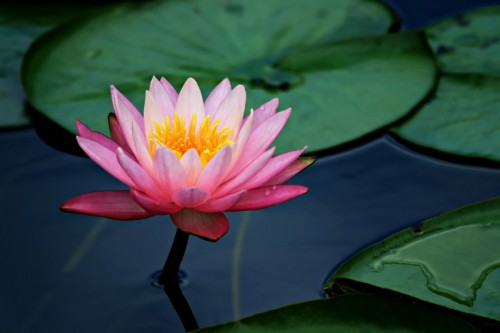
When we are awake we are like children at the Christmas tree opening the wonderful gifts of life. Amongst these gifts we find our unique gift which we are able to give back to the world. Thus we find abundance and peace in our gift.
Wednesday, February 2, 2011
Magic in a Chinese Temple

When visiting a Chinese Buddhist temple or taking part in a Chinese temple stay, if you are alert and tuned in you can experience what is termed in Chinese as “ling” a type of magic or presence. It is very hard to describe but many who have spent some time in a Chinese temple stay will know what I am talking about.
“Ling” is a charged energy created by often centuries of prayerful and sincere chanting and meditation of the monks and nuns.
Guang Jue Temple near the small town of Zaoxi in Zhejiang province in China is one such place. You can catch a bus from Shanghai South bus station to Lin’an then a smaller local bus to Zaoxi town. Alighting at Zaoxi town you stroll through a sleepy little rural town past groups of townsfolk playing Mahjong in shop fronts and shop keepers dozing off during the afternoon siesta on reclining camp chairs out front of their shop. The narrow street makes its way past the local school over a bridge and before long you find yourself walking past fields of corn with meandering streams with ducks lined up on floating bamboo poles. The country road exudes a scent from Lady Moon trees lining both sides of the road and mature provides its backdrop of breathtaking mountain scenery. The road has a poetic Chinese name: Cloud Mountain Road. After two kilometers you come across a stone sign with Guang Jue Temple engraved upon it in Chinese, of course.
The first time I walked this road it seemed that my walking pace slowed down almost as if my legs and mind joined in some clandestine scheme to slow down my whole being in preparation for my stay at the Qing dynasty monastery. As I turned into the lane that made its way past bamboo and rice fields I could make out the outline of the monastery building amid bamboo groves.
It was a sunny autumn day and hosts of large blue winged butterflies danced across the yellow pumpkin flowers growing outside the monastery gate. Only the sound of cicadas and small sparrows could be heard amidst a deepening silence.
A Chinese temple plays with the senses. The colours of flowers and paintwork of the ancient temple, the scent of old rosewood furniture and incense is there to intrigue you. I felt a little dizzy. It seemed surreal. Time had stood still. I found myself standing in another era in a deep sense of Pure Land peace. My reverie was soon interrupted by the greeting and welcoming smile of the Abbott, Zheng Rong.
All Chinese Buddhist Temples have a history. Guang Jue Temple has its own history which gives form and shape to its “magic”. During the Qing dynasty it housed over two hundred monks and nuns. Now only five remain. During the Sino-Japanese war in 1942 the temple took a direct hit from bombs dropped randomly from low flying aircraft making their way to Hangzhou to pound the city. Locals tell me that all monks and nuns fled and there were no casualties. All left except one nun. Her name was Jue Ming.
We often hear of the great feats of meditation of the renowned Masters of Chinese Buddhism or read their erudite commentaries about sutras or their methods of achieving enlightenment. We seldom read about forgotten monks, nuns or even lay people who devoted whole chunks of their life to the practise often under harsh conditions. Jue Ming refused to leave the ruins feeling that she had to reverse the tide of Karma that brought the very destruction on the temple. For almost fifty five years Jue Ming performed the Pure Land Buddhist practise of chanting the name of Amitabha Buddha continually day and night as well as the chanting of mantras and sutras. Locals cannot explain why she remained undetected for so long – perhaps they considered her a fool. It was not until the present Abbott commissioned by his temple in Hangzhou to go in search of this reported hermit nun that she was found and brought back to her community.
One morning at an earlier temple stay I found myself drawn to the memorial garden marking the spot where Jue Ming prayed and chanted each day and where her ashes are now interred. It was a very cold autumn morning shrouded in the mountain mists. I sat on a small stone seat. It was so very cold I wanted to change my mind and go back to my room. As quickly as this thought entered my mind I felt a warm flow of air about me. I meditated in peaceful bliss for over an hour without feeling any cold. What was this warm air? Where did it come from?
Even the most skeptical admit to experiencing a very “warm” or “good” or “serene” feeling. Most people who come here on their Temple Stay feel a deep change taking place. Guang Jue is a Chinese Temple with “ling”. More than that, it has a lesson to teach each one of us if we will allow it. Magic remains only magic if all it does is take your breath away. It becomes awakening when is gives you a new breath of life.
Subscribe to:
Posts (Atom)